Description
The third volume of Ardeshir Zahedi’s memoirs covers the period from 1966 to 1971, when he served as Iran’s minister of foreign affairs.
Zahedi’s recounts and reflections give insight into the Shah’s philosophy of leadership and foreign policy. During Zahedi’s tenure as foreign minister, significant events include the Shah’s coronation, Bahrain’s independence, and Zahedi’s fractious relations with the prime minister.
Under Zahedi’s stewardship, Iran established relations with numerous countries and became an international force for peace. During this period, Iran accepted Bahrain’s independence, signed the international Treaty on the Non-Proliferation of Nuclear Weapons, and re-established relations with Egypt. The status of the Iranian foreign ministry was raised. Iranian citizens could travel to most countries without a visa. More Iranian embassies were opened around the world, and Iranian diplomats were hired based on their competence rather than their family background.
Strong, reliable communications and relations were established with fellow Muslim countries, the non-allied movement, and the global superpowers. Zahedi helped develop strong ties between Iran and the world and also formed personal friendships with many of their leaders and foreign ministers. We learn about his political and personal relations with Marshal Tito, Lyndon Johnson, Richard Nixon, Iskander Mirza, King Hussein of Jordan, King Hassan of Morroco, Luis Echeverría of Mexico, Giovanni Leone, Aldo Moro, William Rogers, Henry Kissinger, İhsan Sabri Caglayangil of Turkey, Abdullah Salah of Jordan, Mahmoud Riad of Egypt, and others.
On the global stage, these years saw the assassinations of Martin Luther King and Robert Kennedy, the 1967 Arab–Israeli War, the Vietnam War, and Neil Armstrong landing on the moon. Zahedi relates how Iran perceived these events and how the country was affected by them.
This two-book set includes 200 photographs and more than 3,000 pages of previously unpublished documents.
Author
Ahmad Ahrar (editor)
Veteran Iranian journalist Ahmad Ahrar is presently the editor in chief of the Kayhan newspaper published in London.
Ardeshir Zahedi اردشیر زاهدی
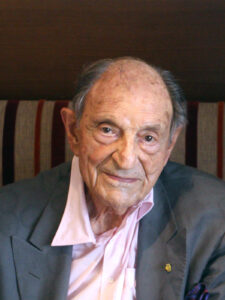
For three decades Ardeshir Zahedi played one of the most significant roles in the political history of modern Iran. As a trusted adviser, confidant, son-in-law, and friend, he played an influential role in the life of the last Shah from 1953 until the king’s death in Egypt in 1980. As a diplomat, he twice served as ambassador to the United States, ambassador to the Court of St. James and for seven years as foreign minister of Iran. He has known and worked with seven U.S. presidents. In the early fifties, he was witness and principal aide to his father in the tumultuous rise and fall of Mohammad Mossadegh and the appointment of his father as prime minister.
This volume reveals, with honesty and detail, the intimate life of Iranian political society and the imperial court. It recounts in detail the background and events of the summer of 1953 that led to the fall of Mossadegh and the coming to power of Fazlollah Zahedi, the author’s father. Also included in the book are previously unpublished documents that shine a new light on the events.
Ardeshir was born in 1928. He is a descendant of two families that have shaped the history of Iran. His father, Fazlollah Zahedi (1897–1963), served as prime minister and was an important political and military figure of the Pahlavi period. His mother’s father, Hossein Pirnia Motamen ol-Molk, served as the first prime minister of Iran after the establishment of the constitution in the early twentieth century.
During World War II, when Ardeshir was twelve, his father, who was the commander of the Isfahan military division, was arrested by the British and imprisoned in Palestine. After the war Ardeshir ventured abroad to study in Beirut and the United States. He returned to Iran to play an important role in the political life of his country alongside his father and the Shah, Mohammad-Reza Pahlavi. A few years later, he and Princess Shahnaz, the Shah’s first child, fell in love and were married. The narrative of the courtship and marriage, which sadly lasted only seven years, is recounted in the next volume of his memoirs.
In 1968, as foreign minister, on behalf of Iran he signed the Nuclear Non-Proliferation Treaty. In 1977, while ambassador to the United States, he helped negotiate and free 149 hostages held by Hanafi Muslims at the B’nai B’rith headquarters.

![Memoirs of Ardeshir Zahedi Vol III: 1966-1971 [Persian Language]](https://ibexbooks.com/wp-content/uploads/2026/02/Memoirs-of-Ardeshir-Zahedi-Vol-3-pers.jpg "Memoirs of Ardeshir Zahedi Vol 3 pers")
![Complete Ghazals of Hafez (Divan-e Hafez) [Persian Language]](https://ibexbooks.com/wp-content/uploads/2026/02/Complete-Ghazals-of-Hafez-300x450.jpg "Complete Ghazals of Hafez")
![Memoirs of Ardeshir Zahedi, Vol. I (1928-1954) [Persian Language]](https://ibexbooks.com/wp-content/uploads/2026/02/Zahedi-Memoirs-Vol-1-Pers.jpg "Zahedi Memoirs Vol 1 Pers")
![Memoirs of Ardeshir Zahedi, Vol. II [English]](https://ibexbooks.com/wp-content/uploads/2026/02/Memoirs-od-Ardeshir-Zahedi-2-engl-300x450.jpg "Memoirs od Ardeshir Zahedi 2 engl")