
Description
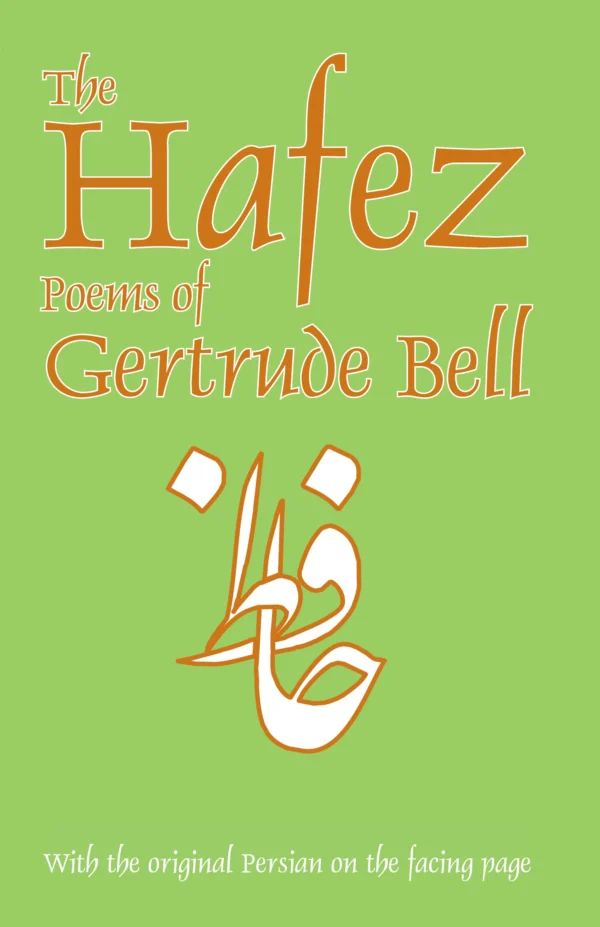
Bell’s translation of Hafez, along with the original Persian.
Includes an extensive introduction and a preface by E. Denison Ross.
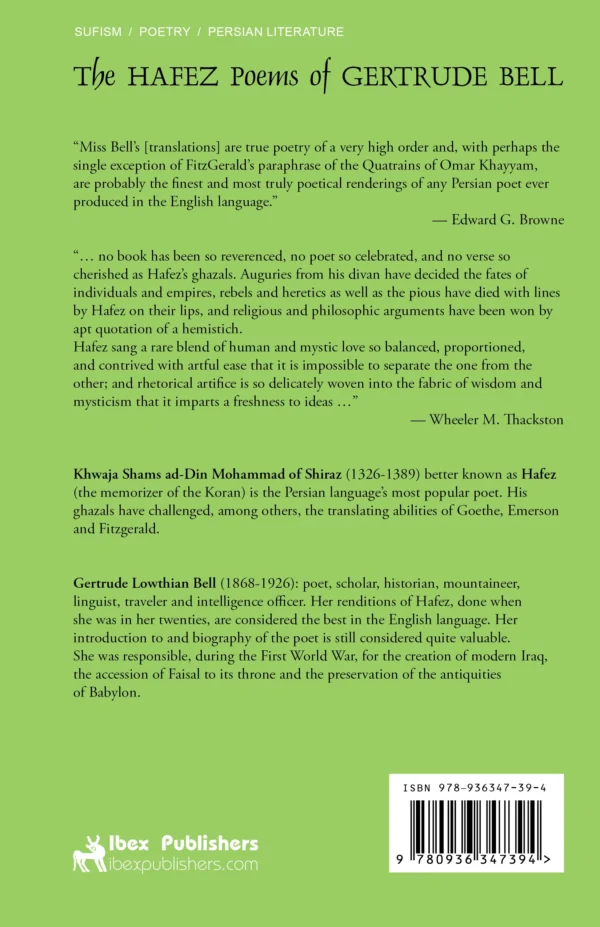
Miss Bells [translations] are true poetry of a very high order and, with perhaps the single exception of FitzGerald’s paraphrase of the Quatrains of Omar Khayyam, are probably the finest and most truly poetical renderings of any Persian poet ever produced in the English language.
— Edward G. Browne
… no book has been so reverenced, no poet so celebrated, and no verse so cherished as Hafez’s ghazals. Auguries from his divan have decided the fates of individuals and empires, rebels and heretics as well as the pious have died with lines by Hafez on their lips, and religious and philosophic arguments have been won by apt quotation of a hemistich.
Hafez sang a rare blend of human and mystic love so balanced, proportioned, and contrived with artful ease that it is impossible to separate the one from the other; and rhetorical artifice is so delicately woven into the fabric of wisdom and mysticism that it imparts a freshness to ideas …
— Wheeler M. Thackston

![Memoirs of Ardeshir Zahedi Vol III: 1966-1971 [Persian Language]](https://ibexbooks.com/wp-content/uploads/2026/02/Memoirs-of-Ardeshir-Zahedi-Vol-3-pers.jpg "Memoirs of Ardeshir Zahedi Vol 3 pers")